TUI Cruises, the cruise travel provider, is currently defending its lengthy cruise trip through the Persian Gulf, where two ships were immobilized for weeks following the outbreak of the conflict in Iran. In a statement to the magazine “Capital” company chief Wybcke Meier insisted that “prior to the outbreak of the Iranian war, there were absolutely no travel warnings for the region”.
This defense comes in response to criticism from Foreign Minister Johann Wadephul (CDU), who initially showed little tolerance for tourists in the area after the war began, asserting that warnings had been issued weeks beforehand. Responding sharply to these accusations, the TUI Cruises chief vehemently denied any recklessness, stating, “We are certainly not careless; I decisively reject that. We are not endangering our passengers, our crew, or our ships”. Meier emphasized that nearly three million tourists travel in the region every year. She added that the company had a delegation in the area two weeks before the attacks, meaning the escalation was unexpected. “If there had been signs of a danger situation, we could have immediately relocated elsewhere-which is actually an advantage of our ships over local hotels” Meier explained.
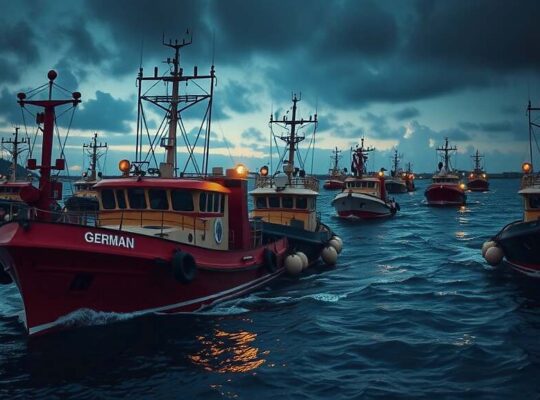
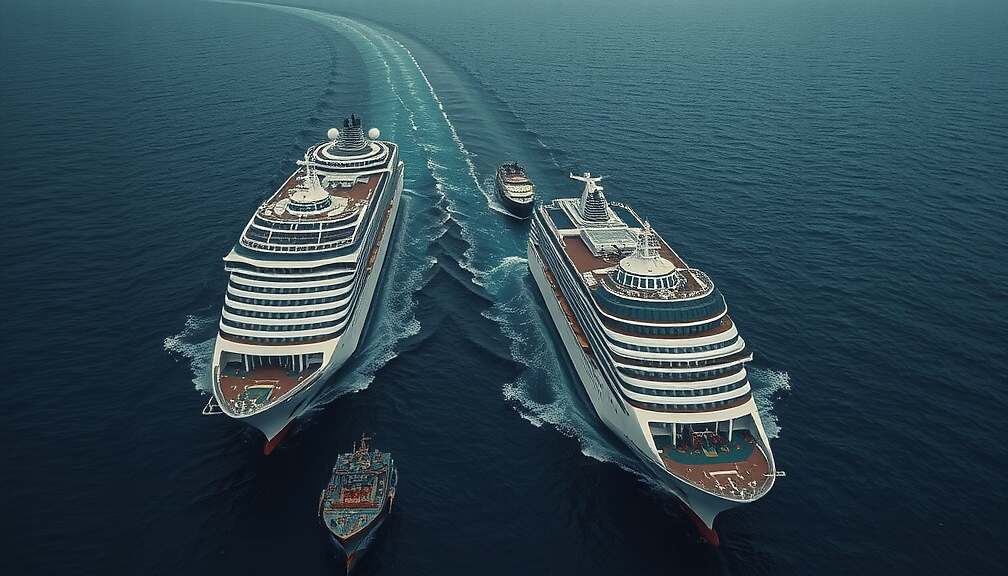
The two cruise ships, “Mein Schiff 4” and “Mein Schiff 5” were in the Persian Gulf with 5,000 passengers and crew members when the conflict started. Fifty days later, in mid-April, both vessels were able to exit the Strait of Hormuz during a brief, several-hour ceasefire and opening-a feat achieved by very few ships.
According to Meier, TUI Cruises deployed 50 staff members to a crisis team during the peak of the event. On day one, both crew and passengers were offered psychological support. “We tried to do everything possible, and ultimately, we flew all passengers home at our expense”. In addition to organizing regular flights, the company also coordinated its own charter capacity to ensure “we left no one behind”.
Ultimately, the two ships were guided out of the Strait of Hormuz with a minimum crew complement of 60 voluntary crew members each. Meier explained that prior to this, the company negotiated with the International Maritime Organization and all regional authorities to “assess whether our crew could receive free passage on humanitarian grounds”. Once the necessary permits were secured, the captains released the lines. She confirmed, “We were not threatened or shot at. We followed a pre-approved and verified route for the journey”. The company maintained that it never had contact with Iranian authorities, nor was any protective tariff demanded or paid for the ships’ transit.