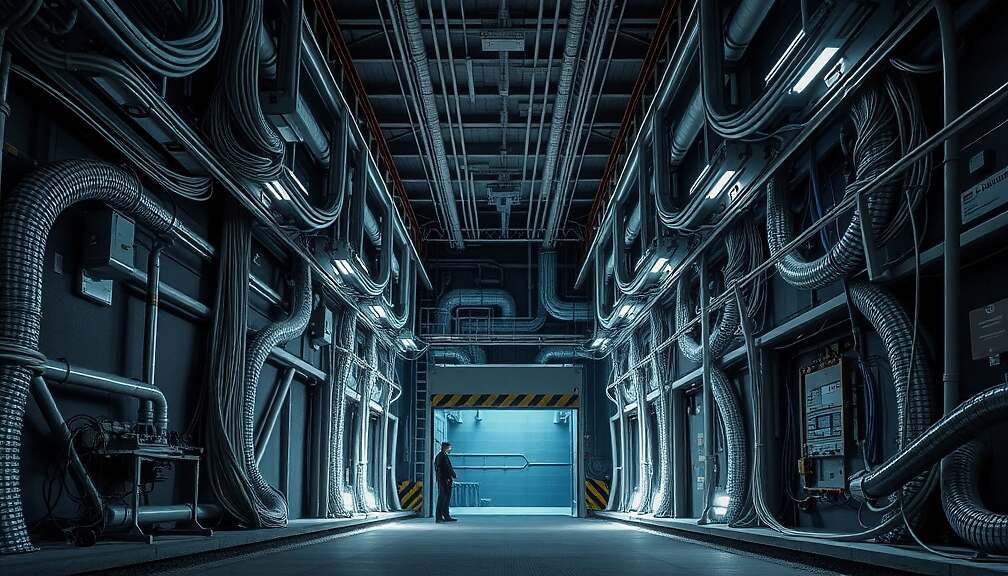
Following recent attacks on power grids in Brandenburg and North Rhine-Westphalia, Nina Scheer, the SPD parliamentary group’s energy policy spokesperson, argues strongly for burying electrical power lines underground. Speaking to the “Rheinische Post,” Scheer acknowledged that critics often bemoan the longer repair times associated with underground cables following damage. Nevertheless, she insists that prevention should not be overlooked. She points out that even shorter outages can have devastating effects, especially given the growing reliance on electricity, which strengthens her advocacy for underground wiring and increased state responsibility. According to Scheer, the security and defense capability of the nation-along with the lives of its citizens-are dependent on the electrical infrastructure.
Scheer further stressed that the attacks on power systems necessitate a new understanding of security requirements. She emphasized that in this age of digitalization and the electrification of all aspects of life, protecting the power infrastructure from attacks, whether internal or external, must be viewed as a matter of both national and territorial defense.
In contrast, Andreas Lenz, the energy policy spokesperson for the CDU/CSU parliamentary group, opposes a greater shift toward underground cabling. Speaking to the same newspaper, Lenz argued that this approach does not solve the current problems. He pointed out that substations and other central network nodes would remain above ground, thus remaining vulnerable even with buried cables. Furthermore, he maintained that repairs to underground cables are often even more difficult and lengthy. Lenz acknowledged, however, that the threat of drone attacks must certainly be taken into account. He stressed that the ability to fix resulting damage as quickly as possible is crucial, suggesting that mobile repair units should be kept ready for such incidents.
Meanwhile, Michael Kellner, the Greens parliamentary group’s energy policy spokesperson, called for a more efficient deployment of Bundespolizei (Federal Police) personnel. He argued that the Federal Police need to reallocate their resources. Kellner told the “Rheinische Post” that symbolic border controls with Poland and France are tying up forces that could be far better utilized in protecting critical infrastructure.