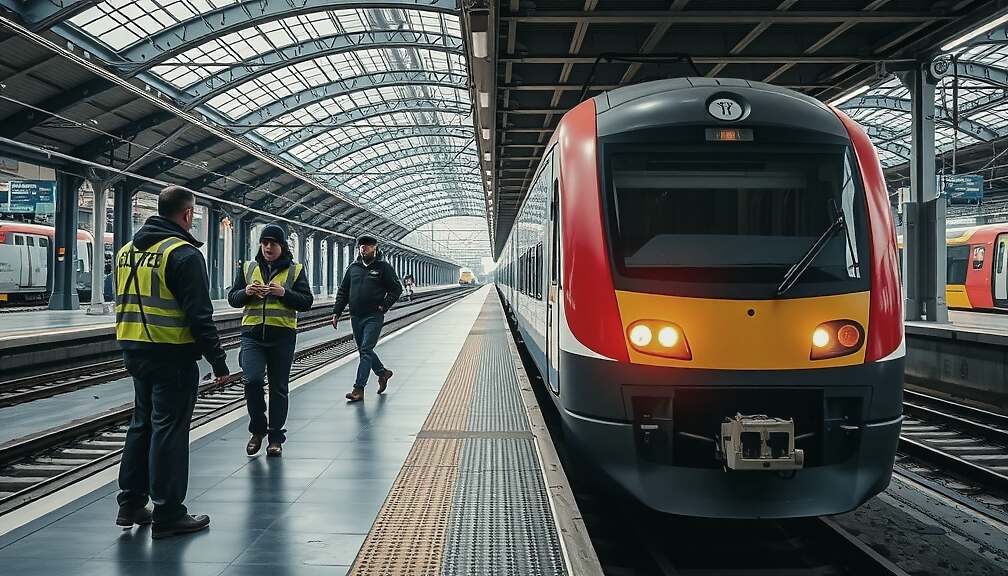
Deutsche Bahn has announced a series of new safety measures for its regional transport operations aimed at enhancing the security of both passengers and staff. The company stated in Frankfurt on Monday that all employees will receive training on the use of body cameras by August, noting that these devices have proven to be an effective preventive measure. According to DB Regio Head Harmen van Zijderveld, “Out of over 500 incidents that required the body cameras to be activated, there was only one case of severe assault.” While carrying the body camera remains voluntary for staff, the corporation aims to use mandatory training sessions to convince more colleagues of its benefits. Regarding equipment availability, van Zijderveld confirmed that “everyone who wants a body camera will receive one.”
Furthermore, the company is currently working to upgrade the existing technology so that captured footage will include audio recordings, alongside video. This change is intended to significantly improve both the preventive impact of the cameras and the ability to clarify criminal offenses. Van Zijderveld expressed confidence that they will be able to launch this enhanced system in the autumn.
The railway has also been testing new security concepts through pilot programs. These include a system called “1/1 accompaniment,” where customer service representatives are paired with an additional person skilled in security, and the implementation of dual staffing within customer service roles. Van Zijderveld noted that “both approaches have shown that conflict- and emotionally charged situations can be managed better and are ready for deployment beyond regional routes.”
In July, the railway plans to conduct a trial of ballistic vests to expand personal protective equipment for its employees. Additionally, the mandatory de-escalation training will be expanded nationwide to include a new module on “Self-assertion on the Train.”
The deployment of artificial intelligence (AI) is also under review. In the future, camera footage taken inside trains could be transmitted to the control center in real-time. The AI would then analyze the footage, alerting operators to conflicts, such as an argument between passengers or acts of vandalism. The company stated that this system would significantly increase response times and allow for the rapid deployment of emergency personnel if necessary.